Introduction
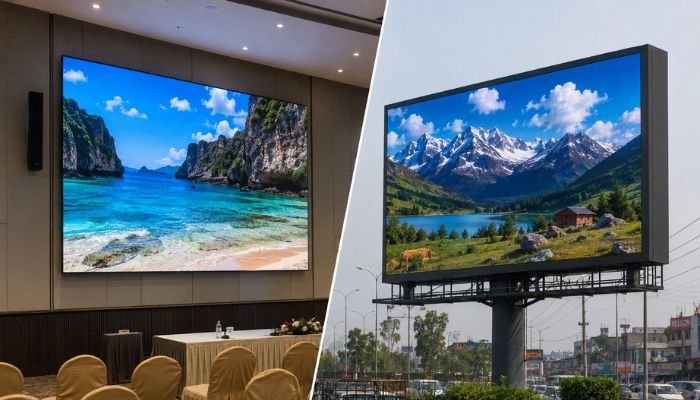
One of the most common questions we get from Pakistani businesses is: “Do I need an indoor or outdoor SMD screen?” It sounds like a simple question, but the answer involves brightness, pixel pitch, IP ratings, viewing conditions, and different maintenance requirements.
Choose the wrong type, and you may overspecify an outdoor-rated screen for an indoor space or use an indoor screen in an environment exposed to weather conditions. We’ve seen both situations happen — from indoor screens being used in outdoor areas to displays facing issues because they were not designed for moisture, dust, or direct sunlight.
This guide breaks down the key differences between indoor and outdoor SMD screens, with practical recommendations for common business scenarios in Pakistan. By the end, you’ll know which type suits your needs and which specifications to consider.
Brightness: The Most Visible Difference
Brightness is the #1 technical difference between indoor and outdoor SMD screens, and it directly affects both cost and visual performance.
Indoor SMD Screen Brightness
- Typical range: 1,200 – 2,500 nits (cd/m²)
- Standard for corporate/hospitality: 1,200 – 1,500 nits
- High-bright indoor (glass atriums, near windows): 2,500 – 3,500 nits
- Semi-outdoor (covered but sun-exposed): 3,500 – 5,500 nits
Indoor screens are designed for controlled lighting environments. Going above 2,500 nits indoors causes glare and eye strain — a common mistake in Pakistani corporate offices where high-brightness screens are installed in conference rooms and cause discomfort during long meetings.
Outdoor SMD Screen Brightness
- Typical range: 5,500 – 7,500+ nits
- Standard outdoor (building facades): 5,500 – 6,500 nits
- Direct sunlight (south-facing, no shade): 7,500 – 10,000+ nits
- Highway billboards (long-distance viewing): 7,500+ nits
Pakistan’s peak sunlight reaches approximately 100,000 lux. A screen needs at least 5,500 nits to remain readable in direct sunlight. Below that, your content becomes invisible during daytime hours — essentially wasting your investment.
Cost Impact of Brightness
Higher brightness requires more powerful LEDs and more power supplies. A 7,500-nit outdoor screen costs roughly 2-3x more per square meter than a 1,500-nit indoor screen of the same pixel pitch. Running costs are also higher — a 6m × 4m outdoor screen at 7,500 nits consumes approximately 8-12 kW, while the same size indoor screen at 1,500 nits consumes 3-4 kW.
IP Rating: Weather Protection That Defines Durability
IP (Ingress Protection) rating determines how well your SMD screen resists dust and water. This is where indoor and outdoor screens differ most dramatically — and where cutting corners causes the most expensive failures.
Understanding IP Ratings
IP ratings have two digits: IP[First][Second]
- First digit (dust protection): 0-6. Level 6 = dust-tight (complete protection).
- Second digit (water protection): 0-9. Level 4 = splashing water, Level 5 = water jets, Level 6 = powerful water jets, Level 7 = temporary immersion.
Indoor vs Outdoor IP Requirements
| IP Rating | Dust Protection | Water Protection | Suitable For |
|---|---|---|---|
| IP20 | None | None | Indoor only (controlled environment) |
| IP31 | Basic | Dripping water | Indoor with occasional condensation |
| IP43 | Protected | Splashing water | Semi-outdoor (covered areas) |
| IP54 | Dust-protected | Splashing water | Semi-outdoor, covered patios |
| IP65 | Dust-tight | Water jets | Outdoor (standard) |
| IP67 | Dust-tight | Temporary immersion | Outdoor (heavy rain, coastal areas) |
| IP68 | Dust-tight | Continuous immersion | Special applications (underwater) |
For Pakistan: IP65 is the minimum for any outdoor installation. In Karachi’s coastal environment with salt air, IP67 is recommended. For indoor installations, IP20 is sufficient, but IP31 adds protection against humidity in areas like swimming pool facilities or food courts.
Pixel Pitch Differences: Indoor Goes Tighter
Indoor screens typically use tighter pixel pitches because viewers are closer. Outdoor screens use wider pitches because viewers are farther away. Here’s how this affects your decision:
| Application | Typical Pixel Pitch | Reason |
|---|---|---|
| Indoor conference room (3-8m viewing) | P2 – P3 | Close-up viewing needs tight pitch |
| Indoor auditorium (8-20m viewing) | P3.91 – P6 | Moderate distance allows wider pitch |
| Semi-outdoor storefront (3-10m) | P3.91 – P5 | Higher brightness compensates for wider pitch |
| Outdoor building display (10-30m) | P6 – P8 | Distance viewers don’t need tight pitch |
| Outdoor billboard (20-50m) | P10 | Standard for roadside advertising |
Cabinet and Build Quality Differences
Indoor LED Cabinets
- Material: Aluminum or lightweight composite — indoor screens don’t face wind loads
- Weight: 15-25 kg per sqm (lighter = easier wall mounting)
- Cooling: Passive cooling (natural convection) — no fans needed for most indoor applications
- Thickness: 40-70mm (thin profile for flush wall mounting)
- Front service: Standard for indoor (modules pop out from the front for easy maintenance)
Outdoor LED Cabinets
- Material: Die-cast aluminum or steel — must withstand wind loads up to 120 km/h
- Weight: 30-40 kg per sqm (heavier = requires structural engineering)
- Cooling: Active cooling with IP-rated fans or sealed cooling fins
- Thickness: 80-120mm (thicker for weatherproofing and structural rigidity)
- Service access: Often rear-service (back-access panels) — front service outdoor screens cost 20-30% more
When to Choose an Indoor SMD Screen
Choose an indoor screen when:
- Your screen will be in a fully enclosed, climate-controlled space
- Viewers will be within 3-15 meters of the display
- Ambient lighting is controllable (no direct sunlight on the screen)
- You want maximum image quality (tight pixel pitch for high resolution)
- Budget for both purchase and operation is a priority
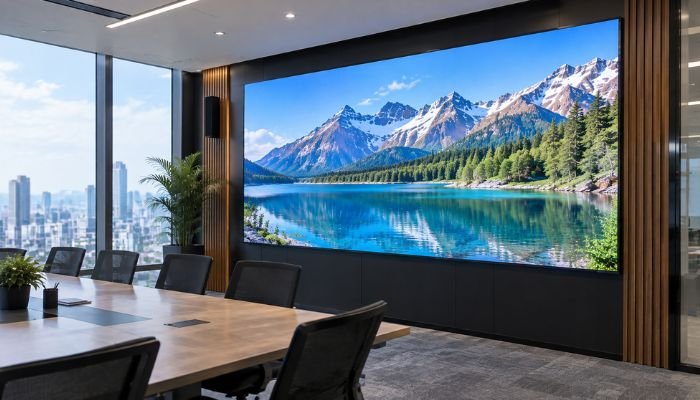
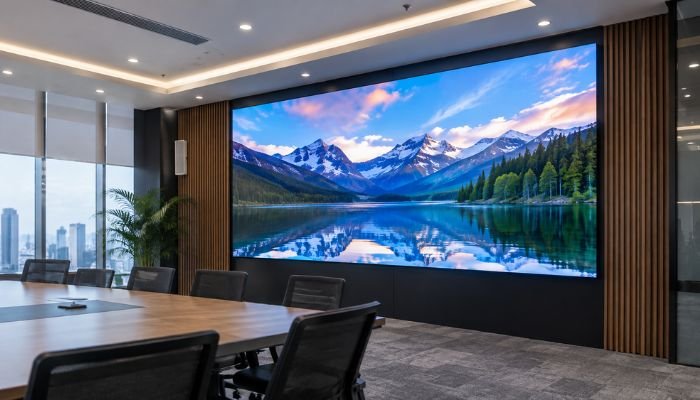
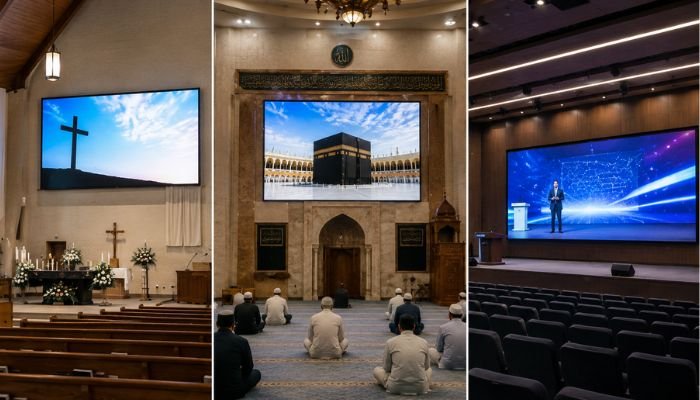
- The screen is for a corporate office, hotel lobby, retail store, conference room, control room, or prayer hall
Recommended indoor specs for Pakistan: P2.5 or P3 pixel pitch, 1,500 nits brightness, IP31 rating, front-service aluminum cabinets.
When to Choose an Outdoor SMD Screen
Choose an outdoor screen when:
- The screen will be exposed to rain, dust, or direct sunlight
- Viewers will be 10+ meters away (driving, walking past, or viewing from across a street)
- The screen is mounted on a building exterior, pole, or standalone structure
- You need 24/7 operation in all weather conditions
- The primary purpose is advertising or public information
- You’re targeting vehicular traffic or foot traffic in open areas
Recommended outdoor specs for Pakistan: P10 pixel pitch (for billboards) or P6 (for closer outdoor viewing), 7,500+ nits brightness, IP65 minimum (IP67 for coastal areas), die-cast aluminum cabinets with active cooling.
The Semi-Outdoor Category: When Neither Pure Option Fits
Many Pakistani businesses need something in between — a display in a covered area that’s not fully enclosed. Examples include:
- Restaurant terraces and rooftop dining areas
- Shopping mall food courts with open-air sections
- Petrol pump canopies
- Building entrances with overhangs
- Stadium concourses
For these applications, a semi-outdoor SMD screen is the right choice. Key specs:
- Brightness: 3,500 – 5,500 nits (handles indirect sunlight)
- IP rating: IP43 or IP54 (protected from splashing, not full rain)
- Pixel pitch: P3.91 to P6 (moderate viewing distance)
- Cooling: Passive or low-speed fan cooling
- Cost: 1.5-2x indoor price, 0.5-0.7x outdoor price
Frequently Asked Questions
Can I use an indoor SMD screen outdoors under a shade?
No, not even under a shade. Indoor screens (IP20/IP31) have no dust or moisture protection. Pakistan’s dust and humidity will corrode internal components within months. Even under a shade, humidity and airborne dust cause failures. Always use at minimum an IP43 semi-outdoor screen for any area not fully climate-controlled.
Can I use an outdoor SMD screen indoors?
Technically yes, but it’s a waste of money. Outdoor screens are heavier, thicker, consume 3x more power, and have wider pixel pitch (lower resolution). You’d be paying for weatherproofing and brightness you don’t need while getting inferior image quality.
What about screens facing windows from inside?
If your indoor screen faces a window and receives direct sunlight, choose a high-brightness indoor screen (2,500-3,500 nits) rather than an outdoor screen. The key factor is whether the screen itself is exposed to weather — not whether it’s visible from outside.
Are semi-outdoor screens worth the extra cost?
Absolutely, for covered-but-open areas. Semi-outdoor screens cost 1.5x indoor screens but last 3-4x longer in semi-exposed environments. Using an indoor screen in a semi-outdoor location to “save money” typically results in replacement within 12-18 months.
Conclusion
The indoor vs outdoor question isn’t about preference — it’s about physics. Indoor screens can’t survive outdoor conditions. Outdoor screens waste money indoors. Semi-outdoor screens solve the middle-ground challenge. Match your screen type to your actual installation environment, factor in the total cost of ownership (not just the panel price), and your SMD screen investment will deliver value for a decade.
Still unsure which category fits your space? Pro SMD Screens offers free site assessments across Pakistan — we visit your location, assess the environment, and recommend the exact screen specification that matches your needs and budget. Contact us today.