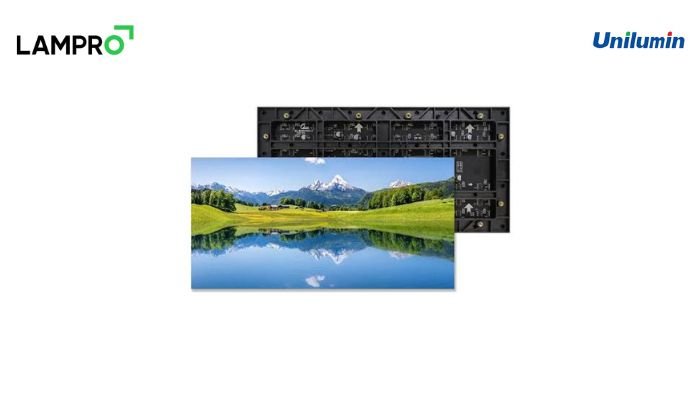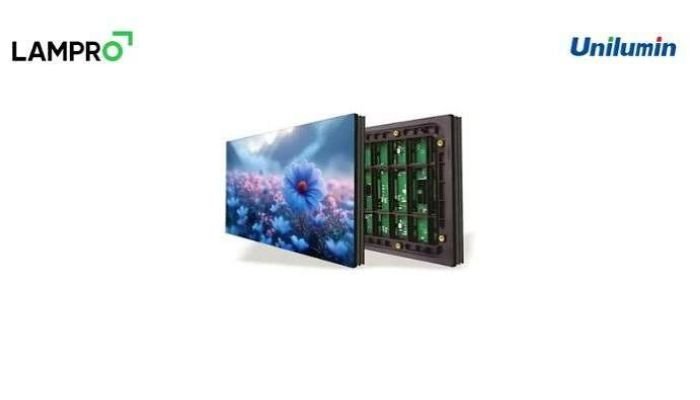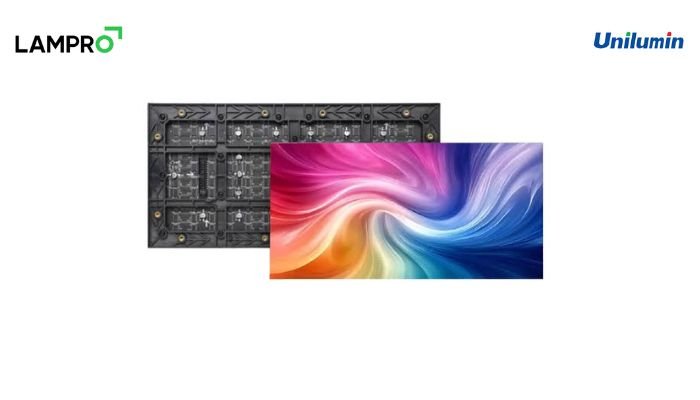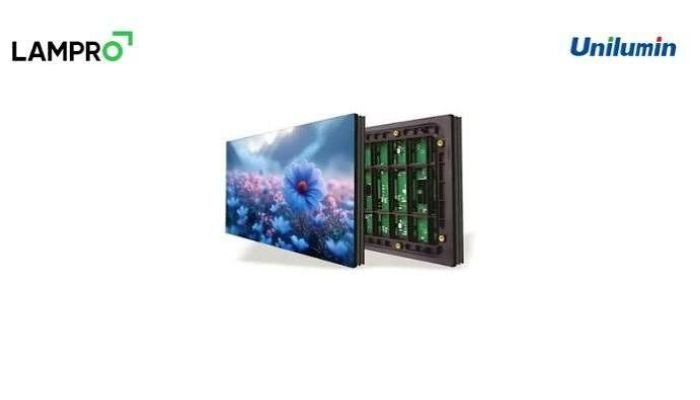


Pixel pitch (measured in millimeters from P0.9 to P10) represents the physical center-to-center distance between LED diodes on an SMD display. In Pakistan, fine pitches (P1.2–P2.5) are engineered for indoor close-range viewing (1–4 meters), while outdoor displays (P4–P10) deliver optimal visibility over 10+ meters. Selecting the correct pitch prevents visual graininess and eliminates unnecessary hardware overspending.
If you have ever stood in front of an LED wall that looked sharp from the back of the hall but dissolved into a grid of dots up close, you have seen a pixel pitch mistake. It is the most common error businesses in Lahore, Karachi, Islamabad and Faisalabad make when buying a display, and it is almost always avoidable. This pixel pitch guide for SMD screens explains what the number means, how to match it to your space, and where your budget should actually go.
What Pixel Pitch Actually Means
Every SMD LED screen is a grid of tiny light clusters, each made of red, green and blue diodes. Pixel pitch is the distance, in millimeters, from the center of one cluster to the center of the next. A P3 screen has 3 mm between pixels. A P10 screen has 10 mm.
The “P” number also tells you pixel density. Because density is the number of pixels packed into one square meter, you can calculate it as (1000 ÷ pitch)². A P2.5 panel holds 160,000 pixels per square meter, while a P10 panel holds only 10,000. Tighter packing means finer detail, which is why small pitches look crisp when you stand close.
How to Calculate SMD Screen Viewing Distance
The simplest way to calculate SMD screen viewing distance is this rule of thumb: the pitch in millimeters equals the minimum viewing distance in meters. A P3 screen needs viewers at least 3 meters back. A P6 screen needs 6 meters. That is the minimum, the point where individual pixels stop being visible to most people.
For a more comfortable experience, especially with text-heavy content, multiply the pitch by two or three. So a P3 display looks its best from roughly 6 to 9 meters. Measure from where your closest viewer will really stand or sit, not from the middle of the room. In a boardroom, that is the front row. In a mall atrium, it is the railing on the first floor.
Content matters too. Video and photography forgive coarse pitches better than spreadsheets, small fonts or detailed dashboards. If your screen will mostly show text, move one step finer than the rule suggests.
SMD Screen Pixel Pitch Comparison Table
Here is how the most common pitches compare. Distances follow the minimum-distance rule above, and cost is shown as a relative factor rather than a price, since final cost depends on size, brand and installation.
| Pixel Pitch | Pixel Density (Pixels/m²) | Optimal Minimum Viewing Distance | Environment Suitability | Relative Cost Factor |
|---|---|---|---|---|
| P1.2 | 694,444 | 1.2 m (3.9 ft) | Indoor Corporate: control rooms, boardrooms, studios | Premium Ultra-Fine |
| P1.8 | 308,642 | 1.8 m (5.9 ft) | Indoor Corporate: reception walls, executive lobbies | Premium Ultra-Fine |
| P2.5 | 160,000 | 2.5 m (8.2 ft) | Indoor Corporate and Retail: showrooms, conference halls | Mid-Range |
| P3 | 111,111 | 3 m (9.8 ft) | Retail and large indoor: malls, banquet halls, event stages | Mid-Range |
| P4 | 62,500 | 4 m (13.1 ft) | Large indoor venues and entry-level outdoor use | Mid-Range |
| P6 | 27,778 | 6 m (19.7 ft) | Outdoor Billboard: storefronts, building facades | Budget |
| P10 | 10,000 | 10 m (32.8 ft) | Outdoor Billboard: highways, large intersections | Budget |
Best Pixel Pitch for Indoor LED Display
Indoor viewers are close, so indoor screens use fine pitches. The best pixel pitch for an indoor LED display depends mostly on how near your audience sits.
P1.2 to P1.8 suits control rooms, broadcast studios and executive reception walls, where people stand within one to two meters. These pitches deliver near-seamless images but sit at the premium end of the price range, so use them only where closeness justifies them.
P2.5 is the most popular choice for corporate offices, showrooms and conference halls. It handles presentations, charts and video comfortably from three meters and beyond.
P3 is the value pick for malls, wedding halls and event stages. Viewers are typically farther away, and the cost savings over P2.5 add up on larger walls. You can see our full range of fine-pitch options on the indoor SMD screens page.
P2.5 vs P3 vs P4: Viewing Distance and When Each Wins
This is the comparison buyers ask about most, because the three pitches are close in price and easy to confuse. The gap between them is small on paper but noticeable in practice.
- P2.5: minimum distance about 2.5 meters, comfortable from 5 meters. Choose it when viewers sit near the screen or when content includes small text.
- P3: minimum distance about 3 meters, comfortable from 6 meters. Choose it for general indoor advertising, stages and open halls.
- P4: minimum distance about 4 meters, comfortable from 8 meters. Choose it for large auditoriums, atriums and wide venues where the audience is far back.
A practical test: stand where your closest viewer will be and ask whether you can see individual dots on a sample panel. If you can, go one step finer. If the room is large and the nearest viewer is well back, moving one step coarser can free up budget for a bigger screen, which usually improves impact more than extra sharpness would.
Outdoor LED Screen Pixel Pitch Guide
Outdoor screens work on different logic. Viewers are far away, often moving past in vehicles, and sunlight is the real enemy. Brightness, weatherproofing and viewing distance matter more than raw density.
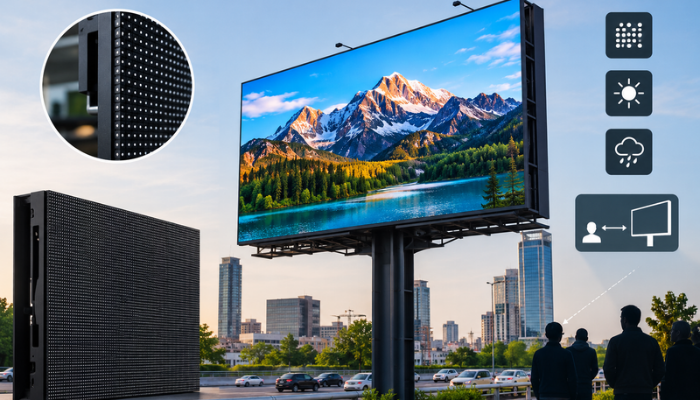
P4 and P5 work for storefront and pedestrian-level screens where people can get within a few meters. P6 and P8 are the standard for building facades and roadside boards viewed from 6 to 10 meters. P10 is built for highways, flyovers and large junctions, where the audience is 10 meters or more away and cannot tell it from a finer pitch.
Choosing a finer pitch outdoors rarely pays off, because the viewing distance cancels the benefit. Spend that money on higher brightness and a larger display instead. Browse our outdoor LED screens to compare cabinet sizes and weather ratings.
How Pixel Pitch Affects Price
Pitch is one of the biggest drivers of cost. Finer pitch means more LEDs per square meter, more driver chips, tighter manufacturing tolerances and a more demanding calibration process. That is why an ultra-fine P1.2 wall sits in a different budget category from a P6 outdoor board of the same size.
Common Pixel Pitch Mistakes Pakistani Buyers Make
- Buying by price alone. A cheap P4 in a room where people sit two meters away looks grainy and disappoints everyone.
- Overspending on fineness. A P1.8 wall in a large hall where nobody stands closer than six meters wastes budget.
- Ignoring content type. Dashboards and text need finer pitch than video loops.
- Measuring from the wrong spot. Distance is set by the nearest viewer, not the average one.
Why Pixel Density Engineering Matters Beyond the Number
Two screens with the same pitch can look very different. Pixel density engineering covers how consistently LEDs are placed, how well each module is calibrated for brightness and color, and how stable the refresh rate stays on camera. These details separate premium panels from average ones.
That is why Pro SMD Screen supplies displays built on tier-1 platforms such as Unilumin, Hikvision and LAMPRO, rather than unbranded modules. For corporate clients in Lahore, retailers in Karachi, event venues in Islamabad and showrooms in Faisalabad, consistent brightness across a whole wall matters as much as the pitch printed on the datasheet. A site survey of the actual room, with a real sample panel, is the most reliable way to confirm the right choice before you commit.
Frequently Asked Questions
What is the best pixel pitch for an indoor LED display?
For most indoor spaces, P2.5 to P3 is the sweet spot. P2.5 suits boardrooms and showrooms where people stand within 3 to 5 meters, while P3 works well for retail floors, banquet halls and lobbies. Choose P1.2 to P1.8 only when viewers will be within 1 to 2 meters.
How do I calculate SMD screen viewing distance?
Use the pitch in millimeters as the minimum distance in meters. A P3 screen needs at least 3 meters, a P6 screen at least 6 meters. For a comfortable view, multiply by two or three. Always measure from where your closest viewer will actually stand.
Is P10 too low in quality for an outdoor LED screen?
No. P10 is designed for audiences 10 meters or more away, such as highways and large intersections. At that distance the eye blends the pixels into a smooth image, and the lower pixel density keeps the cost per square meter down.
Does a smaller pixel pitch always mean a better screen?
No. A smaller pitch gives higher pixel density and sharper close-up images, but it costs more and gains you nothing if viewers stand far away. The right pitch matches your viewing distance and content, not the smallest number on the price list.
Final Word: Match the Pitch to the People
The right pixel pitch is not the finest one you can afford. It is the one that suits where your viewers stand and what you show them. Measure your nearest viewing distance, pick the pitch that clears it, and put the savings into a larger or brighter screen. If you would like a second opinion on your space, the team at Pro SMD Screen can recommend a pitch for your room and budget.