The Screen Lighting Up Every Corner of Pakistan — Finally, Fully Explained: What Is an SMD Screen?
Picture yourself driving down Lahore’s Mall Road at night. To your left, a towering display blazes with a brand advertisement so vivid it stops traffic. In a mall atrium, a curved video wall loops cinematic brand footage. At a wedding banquet, a rear stage screen pulses with elegant animations while the bride’s name glows in golden light. At the local mosque, the Azan time appears in crisp Arabic script for every worshipper to read from across the hall.
Every single one of those displays is powered by the same underlying technology: SMD — Surface-Mounted Device LED screen technology. It is the dominant display platform of our time, and yet the vast majority of people who encounter it daily could not tell you what it stands for, how it produces those extraordinarily vivid images, or why it has so decisively replaced every display technology that came before it.
This guide — produced by the team at Pro SMD Screen, one of Pakistan’s foremost SMD display specialists — is the most thorough, accessible, and up-to-date explanation of SMD screen technology available in the Pakistani market. We have written it for every kind of reader: the business owner deciding whether to invest in a digital billboard, the procurement officer specifying a corporate video wall, the student writing a technology assignment, and the curious individual who simply wants to understand the technology reshaping their visual world. Read it in full, and you will leave knowing more about SMD screens than most industry professionals.
What Does SMD Actually Stand For?
The Origin of the Term
SMD stands for Surface-Mounted Device — an electronics manufacturing term that refers to any electronic component soldered directly onto the flat surface of a printed circuit board (PCB). This is in contrast to older through-hole technology, in which component leads were threaded through holes drilled into the board. Surface mounting enabled a revolution in electronics miniaturisation: components could now be smaller, placed with greater precision, and packed far more densely — enabling the modern smartphone, laptop, and virtually every electronic device built in the last two decades.
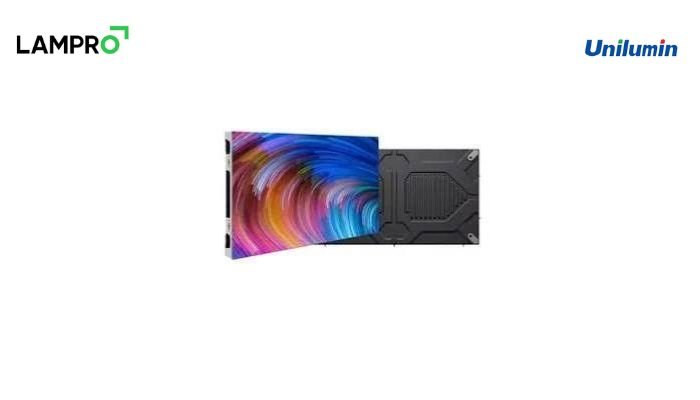
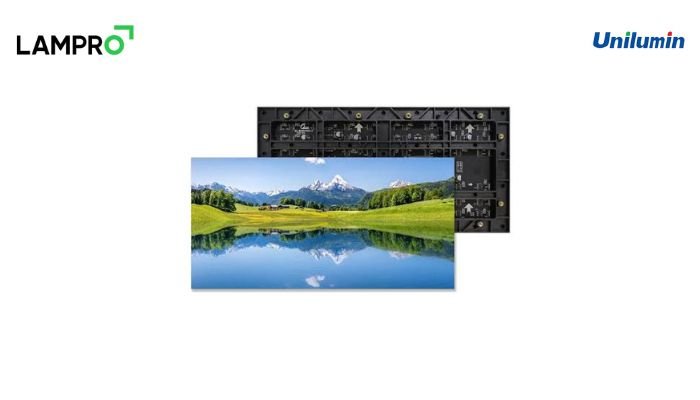
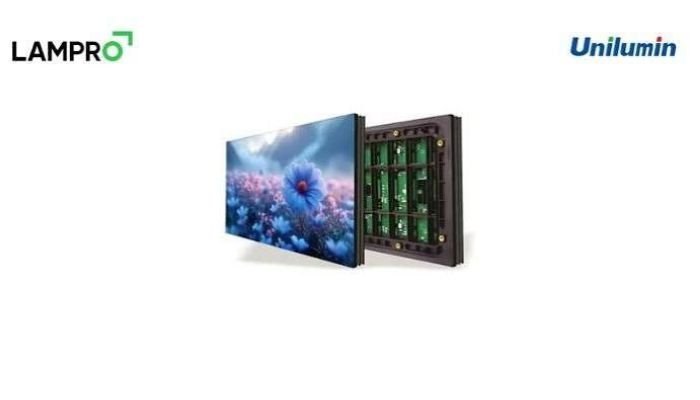
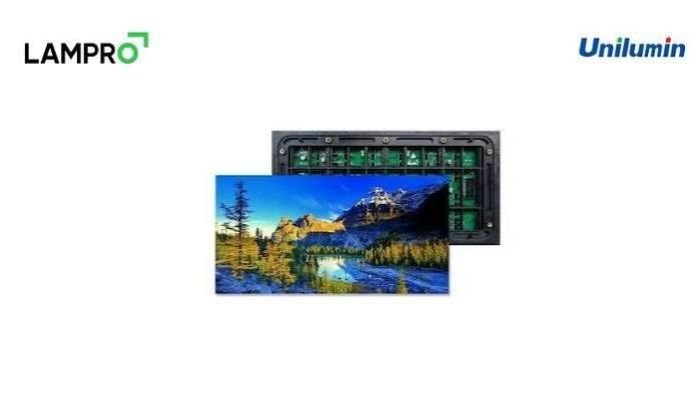
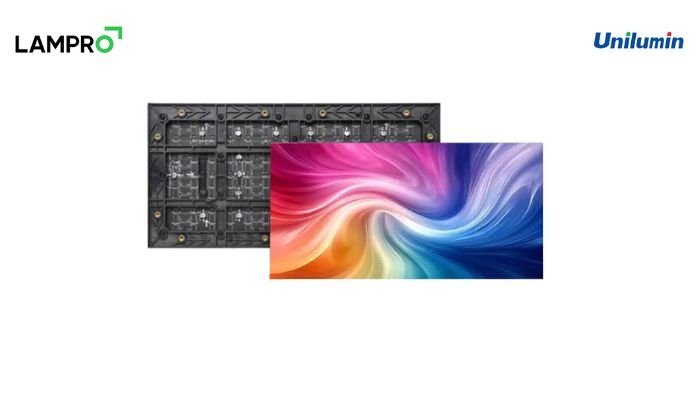
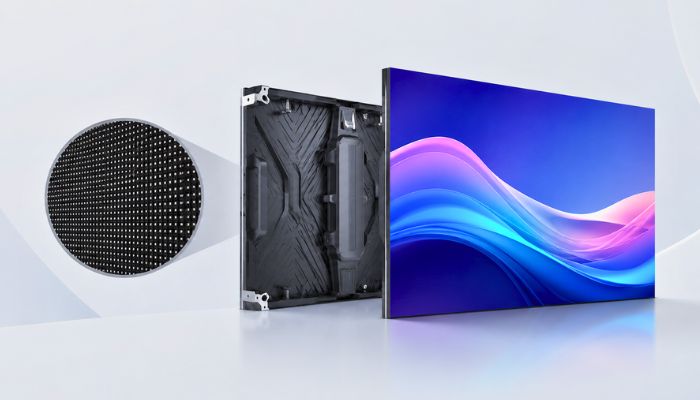
In display technology, the term SMD is used to describe LED display panels where the light-emitting components — individual LED packages, each containing red, green, and blue micro-chips — are surface-mounted directly onto the circuit board that forms each display module. This manufacturing method is what allows SMD displays to achieve the extraordinary pixel densities, colour fidelity, and form-factor flexibility that have made them the global standard for professional digital display.
SMD Screen — The One-Line Definition
Quick Definition
An SMD screen is a full-colour LED display in which the individual light-emitting components — tiny packages each containing Red, Green, and Blue LED chips — are surface-mounted directly onto a circuit board, producing images and video through the combined output of millions of independently controlled colour pixels.
How SMD Gets Its Meaning in Everyday Language
In Pakistan’s commercial and consumer market, the terms “SMD screen,” “LED screen,” and “LED display” are often used interchangeably — and for practical purposes, they refer to the same category of product. When a business owner in Lahore asks for an “LED screen for their shopfront,” they are almost certainly describing an SMD LED display. The SMD qualifier distinguishes modern surface-mount LED technology from the older DIP (Dual In-line Package) technology that preceded it — a distinction that matters technically but is rarely made explicitly in everyday conversation.
The Science Behind SMD Screens: How They Produce Images
Colour From Light: The RGB Principle
Everything visible on an SMD screen is produced by the controlled mixing of three colours of light: Red, Green, and Blue — RGB. These are the three primary colours of light (as opposed to the primary colours of pigment — red, yellow, and blue — which govern paint and ink). By combining red, green, and blue light in different proportions, it is possible to reproduce virtually any colour that the human eye can perceive.
Each SMD LED package contains three microscopic LED chips — one red, one green, one blue — housed within a single protective enclosure approximately the size of a sesame seed or smaller. The display control system manages the electrical current flowing to each chip individually, varying its brightness across 256 levels per channel. The mathematics are straightforward: 256 × 256 × 256 = 16,777,216 possible colour combinations per pixel. That is the “true colour” standard used by professional broadcast media and digital photography — and it is what gives SMD screens their extraordinary colour richness.
From Pixel to Picture: How Your Brain Reads the Screen
Each SMD LED package forms a single pixel — the smallest individually controllable unit of the image. An SMD screen is a grid of these pixels, and the image emerges from the collective output of the entire grid, just as a mosaic creates a picture from individual tiles. The human visual system combines the individual pixels into a seamless image — but only if the viewer is standing at a sufficient distance from the screen.
This is why pixel pitch — the distance between adjacent pixels — is such a critical specification. Stand too close to a low-resolution display and the individual pixels become visible, breaking the illusion of a continuous image. At the correct viewing distance, pixel resolution becomes invisible and the image appears photographic. The relationship between pixel pitch and optimal viewing distance is the central design equation of every SMD display installation.
The Signal Chain: From Source to Screen
Before an image appears on an SMD screen, it travels through a precise signal chain. The content source — a computer, media player, camera, satellite receiver, or broadcasting system — outputs a video signal that is received by a sending card (a hardware device that converts the video signal into the data format understood by the LED panels). This data travels via network cables to receiving cards distributed across the display panels, which translate the incoming data into precise electrical current commands for each individual LED chip across the entire display surface — typically refreshing the image thousands of times per second to deliver smooth, flicker-free motion content.
Pixel Pitch Explained: The Specification That Changes Everything
What Is Pixel Pitch and Why Does It Matter?
Pixel pitch is measured in millimetres and represents the distance from the centre of one LED package to the centre of the adjacent one. The “P” in product names like P3, P4, P6, P10 stands for this pitch value. A P3 screen has a 3mm pixel pitch; a P10 screen has a 10mm pixel pitch. The lower the P value, the more pixels are packed into every square metre, and the higher the effective resolution of the display.
Pro SMD Screen Rule of Thumb
Your pixel pitch number (in mm) should not be greater than the minimum viewing distance in metres. If your closest viewer will stand 4 metres away, you need no finer than P4. Going finer adds cost without visible benefit; going coarser means visible pixelation at that distance.
Types of SMD Screens: A Complete Classification
By Installation Environment
The most fundamental categorisation of SMD screens is by their installation environment — indoor or outdoor smd screen — because the engineering requirements for each differ fundamentally.
Indoor SMD Screens are designed for controlled environments where the display is protected from direct weather exposure. Their key engineering priorities are:
- Optimised brightness (800–2,500 nits): Bright enough for indoor ambient light, low enough to avoid glare for viewers at close range
- Fine pixel pitches (P1.2–P4): Indoor viewers are often much closer to the screen than outdoor audiences, requiring higher pixel density for sharp imagery
- Slim form factor: Without weatherproof housings, indoor cabinets are lighter and thinner — easier to mount on walls and ceilings
- Quieter operation: Reduced or passive cooling adequate for lower-brightness indoor operation, minimising fan noise in occupied spaces
Outdoor SMD Screens must withstand every element Pakistan’s climate can deliver — from monsoon rain in Punjab to dust storms in Sindh to freezing temperatures in Gilgit-Baltistan. They are engineered accordingly:
- Ultra-high brightness (5,000–12,000 nits): Direct sunlight requires extreme brightness for the content to remain clearly visible against the ambient sky luminance
- IP65+ weatherproofing: Complete protection against dust ingress and water jets from any angle — essential for Pakistan’s monsoon season
- Extended temperature tolerance: Typical rating -20°C to +65°C covers everything from mountain winters to Karachi’s summer peaks
- Heavy-duty structural design: Cabinet systems rated for wind loads up to 120km/h for rooftop and elevated installations
By LED Technology Type
Within the SMD category, there are several important sub-technologies that distinguish products at different price and performance points:
Standard SMD: The baseline technology — exposed LED packages surface-mounted on the PCB. Excellent value and performance for the majority of commercial applications. Available in the full range of indoor and outdoor specifications.
GOB (Glue-on-Board) SMD: A premium enhancement in which optically transparent epoxy resin is applied over the LED surface, encapsulating each pixel in a protective layer. GOB screens offer superior impact resistance, enhanced humidity and dust protection, improved contrast (the dark resin between pixels reduces light bleed), and easier cleaning. Ideal for defence, healthcare, luxury hospitality, and other high-demand environments. Pro SMD Screen supplies GOB screens for Pakistan’s most exacting applications.
COB (Chip-on-Board) SMD: An advanced alternative in which bare LED chips are embedded directly into the substrate without individual packaging, then encapsulated in a single resin layer. COB offers excellent uniformity and protection but carries a significant cost premium, limiting it to specialist ultra-fine-pitch applications where budget constraints are secondary.
Rental/Event LED Panels: Modular panel systems with quick-lock assembly mechanisms, lighter weights, and curved panel capability, designed for rapid setup and breakdown in event environments. Standard SMD LED technology in a field-deployable format — the workhorse of Pakistan’s event industry.
By Application Format
Beyond the indoor/outdoor and technology distinctions, SMD screens are available in several specialised formats:
- Fixed installation screens: Permanently mounted on walls, poles, or building facades — the standard format for permanent commercial and institutional installations
- Transparent LED screens: Glass-embedded displays that allow light transmission through the panel — used in retail window displays and architectural applications where visual connection to the space behind the screen is desired
- Flexible LED screens: Panels on flexible substrates that can be shaped into curves, cylinders, and custom forms — used in creative architectural and branding applications
- Floor LED screens: High-load-rated panels designed for walk-on installation — used in event stages, retail environments, and interactive display applications
- Perimeter/sports LED screens: Ruggedised panels designed for stadium perimeter board installation, with impact-resistant front faces and quick-swap serviceability
The Specifications That Actually Matter: Reading an SMD Screen Datasheet
Brightness — Nits and Why They Matter
Brightness is measured in nits (a nit is one candela per square metre, cd/m²). For outdoor installations under direct Pakistani summer sun, a minimum of 5,000 nits is the practical floor for visibility, with premium outdoor screens reaching 8,000–12,000 nits for exceptional clarity even in the most extreme sunlight conditions. For indoor applications, 800–1,500 nits covers the full range from dim ambient environments to brightly lit retail spaces.
One important nuance: always ask suppliers about sustainable operating brightness, not peak brightness. A screen rated at 10,000 nits peak may only sustain 7,000 nits during continuous operation without thermal throttling. For accurate real-world performance assessment, the sustained brightness figure is more meaningful than the peak specification.
Refresh Rate — The Smoothness Factor
The refresh rate measures how many times per second the display updates its image, expressed in Hertz (Hz). Standard commercial SMD screens operate at 1,920Hz, which is smooth for normal viewing. Premium displays operate at 3,840Hz or higher, which becomes important in three scenarios: when the screen will be photographed or filmed (lower refresh rates create visible banding in camera images), when viewers are particularly close to the screen and sensitive to subtle flicker, or when the screen is used in a broadcast or production environment where camera recording at any shutter speed is expected.
Contrast Ratio — The Depth of the Image
Contrast ratio is the difference between the brightest white and the darkest black the display can produce. A higher contrast ratio makes dark areas of the image appear genuinely deep and rich rather than flat grey, adding a sense of visual depth and dimensionality. Standard SMD screens deliver contrast ratios of 3,000:1 to 5,000:1; premium GOB panels, with their resin layer absorbing inter-pixel light leakage, can achieve 6,000:1 or higher, producing noticeably more impactful and cinematic imagery.
IP Rating — Weatherproof or Not
IP stands for Ingress Protection. The rating takes the form IP[X][Y] where X (0–6) is the dust resistance level and Y (0–9) is the water resistance level. For Pakistani outdoor installations, IP65 is the minimum: 6 (completely dust-tight) and 5 (protected against water jets from any direction). IP67 adds immersion protection to 1 metre depth; IP68 covers deeper immersion. Indoor screens typically carry IP43 or IP54 ratings, providing adequate protection for controlled environments.
Viewing Angle — Who Can See It Clearly
The viewing angle specification (e.g., H160° / V140°) describes how far off-axis a viewer can stand while still seeing a clear, colour-accurate image without significant brightness fall-off. Modern SMD screens offer genuinely wide viewing angles — H160° means viewers can be up to 80° left or right of centre and still see the full image clearly. This is critical for displays in public spaces where audiences approach from many directions and angles. For comparison, standard commercial LCD displays typically offer H178° viewing angles but suffer significant colour shift at extreme angles.
Power Consumption and Energy Efficiency
SMD screens’ power consumption varies significantly by pixel pitch, brightness setting, and content. A typical outdoor P10 display at 50% brightness consumes approximately 300–400W per square metre; an indoor P3 display at typical operating brightness might use 150–200W per square metre. Modern SMD control systems support automatic brightness adjustment based on ambient light sensors, reducing power consumption during overcast conditions and night-time operation — a meaningful running cost saving over the display’s multi-year service life.
Where SMD Screens Are Being Used Across Pakistan in 2026
Commercial Advertising and Outdoor Billboards
The most economically significant application of SMD technology in Pakistan is outdoor digital advertising. The transformation from static printed billboards to dynamic SMD digital displays has fundamentally changed the economics of out-of-home advertising across the country. A single outdoor SMD billboard can display multiple advertisers’ content in rotation, each paying for their time slot — converting what was a single-revenue static asset into a continuously revenue-generating media platform.
Premium locations in Lahore (MM Alam Road, Liberty Roundabout, Main Boulevard), Karachi (Shahra-e-Faisal, Clifton, Korangi), and Islamabad (Blue Area, Constitution Avenue) command significant advertising rates — with a well-located billboard generating PKR 300,000 to PKR 1,500,000 monthly in advertising revenue depending on traffic count and screen size. The payback period for a quality SMD billboard investment in a premium location can be as short as 12 to 18 months.
Events: Weddings, Conferences, and Corporate Gatherings
Pakistan’s events industry is one of the most enthusiastic adopters of SMD display technology. At a typical premium wedding in Lahore, Karachi, or Islamabad, multiple SMD screens serve distinct functions: a main stage backdrop screen displaying the couple’s photographs and ceremony graphics, side relay screens allowing guests at the back of a large hall to see the stage clearly, and entrance displays welcoming guests and displaying event branding. Corporate conferences, product launches, award ceremonies, and political rallies use the same technology at larger scales and higher specification levels.
Retail and Brand Environments
Pakistan’s modern retail sector — malls, brand flagships, electronics retailers, car showrooms, fashion boutiques — uses SMD screens as the primary tool for in-store visual communication. Research consistently shows that well-placed digital displays in retail environments increase customer dwell time by 15–40% and can boost purchase conversion rates for featured products by 20–30%. For automotive showrooms, in particular, large-format SMD displays showing model launch videos and specification animations have become a standard feature of premium brand presentation.
Religious and Community Spaces
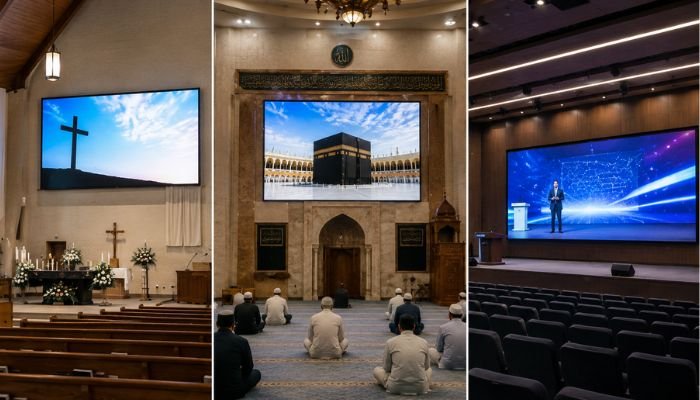
Across Pakistan, SMD screens have found a genuinely significant role in religious and community spaces. Mosques use outdoor screens for prayer time displays visible from outside the mosque entrance, indoor screens for Quranic text display and live Hajj broadcasts, and event screens for special programming during Ramadan and Eid. Community halls, madrasas, and Imam bargahs use similar configurations for religious programming and community announcements. This sector has grown substantially over the past five years and now represents a significant portion of Pakistan’s SMD display market.
Healthcare and Institutional Facilities
Pakistan’s leading hospitals, clinics, and healthcare networks are deploying indoor SMD screens for patient information display, queue management systems, and departmental wayfinding. Government institutions — ministries, military facilities, judicial courts, and police headquarters — use video wall technology for command and control infrastructure, press briefing rooms, and operational monitoring centres. Educational institutions from primary schools to research universities are installing SMD displays for classroom interaction, campus communication, and institutional marketing.
Petrol Stations, Banks, and Fast Food Chains
The rapid standardisation of digital menu boards and promotional displays across Pakistan’s organised retail, banking, and food service sectors has created massive demand for small-to-medium indoor SMD installations. National chains of petrol stations, banks, pharmacies, and fast-food restaurants are deploying standardised SMD digital signage networks across hundreds of locations simultaneously — managed centrally from a single content management platform, with promotional content updated instantly across the entire network without the cost and logistics of print material distribution.
The Smart Buyer’s Guide to SMD Screens in Pakistan
The Five Questions to Answer Before You Buy
- Where is it going? Indoor or outdoor? What are the specific ambient conditions — direct sun, rain exposure, dusty industrial environment, air-conditioned interior, high-humidity coastal location?
- Who will see it and from how far? Define the minimum and maximum viewing distances clearly. The minimum distance determines your pixel pitch ceiling; the maximum determines the minimum size required for the content to be readable.
- What size do you need? Balance available space, structural load capacity, budget, and the visual impact required for your audience. Bigger is not always better — a screen that overwhelms its space is as ineffective as one that is too small.
- What content will run on it? Static images and text require lower resolution than fast-moving video content. Live data feeds, wayfinding systems, and interactive applications require integration with software platforms. Consider your content pipeline before specifying hardware.
- What is your total budget, including all costs? The panel purchase price is typically 50–65% of the total project cost. Factor in structural works, electrical infrastructure, control system hardware, content creation, installation, commissioning, warranty, and annual maintenance.
Why Total Cost of Ownership Matters More Than Purchase Price
The cheapest SMD screen on the market is rarely the most economical choice over a 5-year horizon. A screen that fails within 18 months, requires expensive imported replacement components with 6-week lead times, or delivers visibly poor image quality that fails to achieve its commercial purpose is a far more costly investment than a premium-specification screen from a reputable supplier with local support infrastructure.
When evaluating SMD screen proposals, request the following information from every supplier: warranty duration and coverage terms, local spare parts availability, typical response time for service calls, specific LED chip brand and country of origin, control system brand, and references from comparable completed projects. Pro SMD Screen provides transparent answers to all of these questions for every project — because our long-term relationships with clients depend on delivering exactly what we promise.
Understanding SMD Screen Pricing in Pakistan 2026
Pricing in Pakistan’s SMD market varies widely based on specification, quality tier, and supplier.
Contact Pro SMD Screen for a detailed, project-specific quotation. All pricing is subject to screen size, specification, installation complexity, and site conditions.
SMD Screen Installation: The Professional Process
Phase 1 — Site Survey and Technical Design
No reputable SMD screen supplier will commit to a price or specification without first conducting a thorough site survey. The survey establishes the exact installation dimensions, structural capacity of the mounting surface or support structure, available electrical supply and required infrastructure upgrades, cable routing pathways, and environmental conditions that will affect the long-term performance and reliability of the installation.
The site survey data informs a technical design package — engineering drawings, electrical layout plans, mounting structure specifications, and cable management design — that becomes the governing document for the entire installation project. Skipping or shortcutting this phase is the single most common cause of SMD installation problems in Pakistan’s market.
Phase 2 — Structural and Electrical Preparation
For most SMD installations, preparatory works must be completed before any display components are installed. These include fabricating and fixing the mounting frame or pole structure, installing conduit and cable trays for power and signal wiring, establishing the dedicated electrical supply with appropriate surge protection and isolation, and completing any civil works — wall reinforcement, concrete pad for ground-mounted poles, roof penetrations for cable entry — required by the installation design.
Phase 3 — Panel Assembly and Connection
LED panel modules are installed onto the prepared mounting structure in a precise sequence, with mechanical alignment maintained within tight tolerances — typically better than 0.2mm panel-to-panel gap consistency for premium installations. Power cables and signal cables are connected using appropriate connector types — quality installations use locking industrial connectors rather than standard push-fit connectors, ensuring that vibration and thermal cycling over the screen’s service life cannot cause connection failures.
Phase 4 — Calibration and Commissioning
A freshly assembled SMD display will show visible brightness and colour variations between individual panel modules — this is normal and expected. Calibration is the process of measuring and correcting these variations to achieve uniform brightness and consistent colour temperature across the full display surface. Professional commissioning also includes optimising the gamma response for the specific viewing conditions, testing all input sources, verifying control system functionality, and conducting an extended burn-in test to ensure stable performance before handover. At Pro SMD Screen, we do not hand over any installation without completing full calibration and a minimum 48-hour burn-in verification.
Keeping Your SMD Screen Performing: Maintenance Essentials
Routine Cleaning
Outdoor SMD screens accumulate dust, traffic pollution, bird droppings, and in coastal areas, salt deposits. Without regular cleaning, this accumulation gradually reduces brightness and — in severe cases — penetrates to the electronic components and causes corrosion damage. Professional cleaning every three to six months using appropriate anti-static display cleaning solutions is the minimum maintenance standard for outdoor screens. Indoor screens in clean air-conditioned environments require less frequent cleaning but should still be inspected and dusted every six months.
Annual Preventive Maintenance
Once per year, a professional maintenance visit should include: inspection and re-tightening of all electrical connections (thermal cycling causes terminals to loosen over time), visual inspection for dead or dim pixels, cleaning and inspection of cooling fans and ventilation pathways, thermal imaging of power supply components to identify failing units before they cause outages, firmware updates for control system components, and a full performance benchmark against original commissioning measurements to track long-term degradation trends.
Brightness Management for Extended Life
LED brightness output decreases over time — this is a normal characteristic of all LED technology. The rate of degradation is directly proportional to operating brightness level: a screen running at 100% brightness ages its LEDs significantly faster than one operating at 70%. For outdoor screens where content remains clearly visible at reduced brightness, operating at 60–75% of maximum output both extends the LED service life and reduces electricity consumption — a practical running cost and longevity benefit that adds up significantly over a multi-year service life.
The Future of SMD Screen Technology in Pakistan
Finer Pitch, Better Value: The Resolution Revolution Continues
The trend in SMD display technology has consistently moved toward finer pixel pitches at lower cost per pixel — and this trend shows no sign of slowing in 2026. Pixel pitches that were considered premium specialist products just three years ago (P1.8, P2, P2.5) are now mainstream options at prices accessible to mid-market buyers. This democratisation of high-resolution display technology is opening applications that were previously only accessible to large enterprise budgets.
Smart Integration and IoT Connectivity
Modern SMD display management systems are increasingly internet-connected and cloud-managed, enabling remote content updates, automated scheduling, real-time performance monitoring, and predictive maintenance diagnostics from anywhere in the world. For businesses with multiple display locations across Pakistan’s cities, centralised cloud management eliminates the need for on-site visits for routine content changes — dramatically reducing the operational overhead of managing a display network.
AI-Powered Content and Dynamic Personalisation
Artificial intelligence is beginning to transform what SMD display networks can do with their content. AI-driven dynamic content systems can automatically serve different advertisements based on time of day, weather conditions, audience demographics detected by camera systems, or real-time commercial triggers such as sports results or stock market movements. For Pakistan’s growing digital out-of-home advertising ecosystem, these capabilities represent a significant uplift in advertising value and commercial relevance.
Sustainable SMD Technology
As Pakistan’s awareness of energy costs and environmental impact grows, the energy efficiency credentials of SMD technology are becoming an increasingly important purchasing consideration. Next-generation LED chips consume progressively less power per unit of brightness output — the latest mini-LED and micro-LED technologies promise to deliver equivalent brightness at 30–50% lower power consumption than current generation SMD panels, substantially reducing the running costs and carbon footprint of digital display installations.
Conclusion: SMD Screens — Pakistan’s Most Powerful Visual Communication Tool
From the full-form definition of Surface-Mounted Device to the physics of RGB colour mixing, from pixel pitch mathematics to installation phase-by-phase, from pricing frameworks to maintenance protocols — you now have a genuinely comprehensive understanding of SMD screen technology as it stands in 2026. More importantly, you understand why this technology has so completely come to dominate Pakistan’s visual communication landscape, and what considerations should guide anyone making a decision about adopting it.
The combination of extraordinary visual quality, genuine operational flexibility, proven durability across Pakistan’s diverse climate zones, competitive long-term economics, and an expanding application ecosystem means that SMD screens are not a passing trend. They are fundamental infrastructure for every business, institution, and public space that takes visual communication seriously — and their role will only grow as the technology continues to improve and costs continue to fall.
If you are ready to explore what an SMD screen can do for your specific project — whether that is a small indoor display for your office, a large outdoor billboard for your commercial property, a rental screen for your next event, or a premium GOB video wall for a demanding institutional environment — the team at Pro SMD Screen is ready to help you make the right choice. We bring the product quality, the technical expertise, and the honest advice that ensures every project we deliver becomes a success story.
About Pro SMD Screen
Pro SMD Screen is Pakistan’s trusted specialist in SMD LED display technology — supplying, installing, and supporting high-performance indoor and outdoor SMD screens for commercial, institutional, government, events, and defence clients across Pakistan. With a reputation built on product quality, technical honesty, and genuine after-sales commitment, Pro SMD Screen is the partner that Pakistan’s