
| TL;DR
SMD screens are increasingly installed in mosques across Pakistan to relay the Jumma khutbah, Ramadan taraweeh, and Eid prayers to overflow areas, courtyards, and women’s sections. Indoor halls typically use P2.5–P4 pixel pitch, while outdoor courtyards and Eidgahs need weatherproof P4–P6 panels with high brightness for daylight visibility. Content is usually limited to live relay, Quranic verses, and prayer timings, displayed respectfully without distracting animations. Pro SMD Screen supplies and installs indoor and outdoor mosque display solutions across Lahore, Karachi, and Islamabad. |
Why Mosques Are Adopting SMD Screens
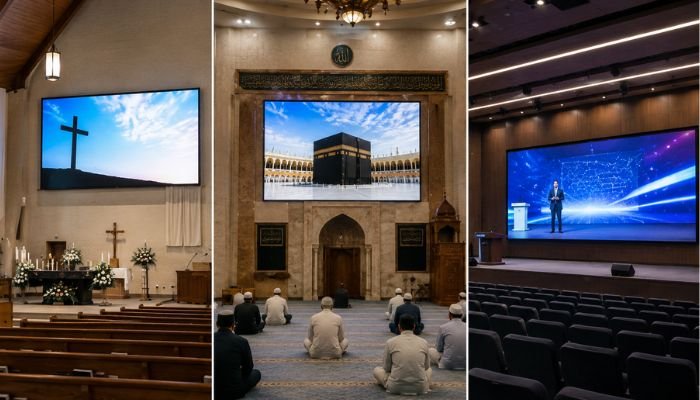
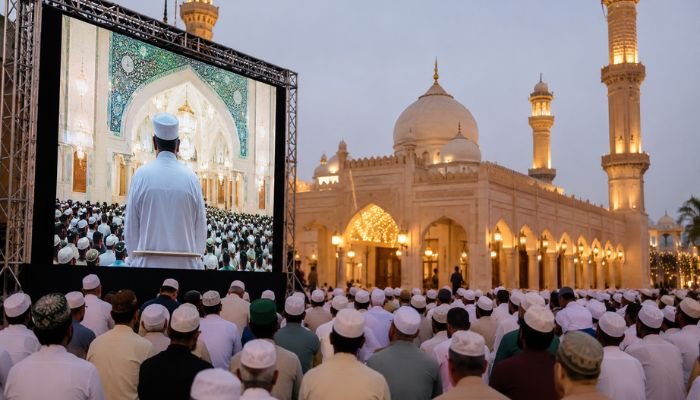
Friday congregations, Ramadan taraweeh, and Eid prayers regularly bring more worshippers than a mosque’s main hall can seat, pushing rows out into courtyards, side halls, and even the street outside. Without a way to see the imam, worshippers in overflow areas rely purely on the loudspeaker, which works for audio but leaves them disconnected from the visual side of the khutbah and prayer. SMD screens address this by relaying a live camera feed of the mimbar and prayer hall to every corner of the mosque premises, so worshippers standing in the courtyard feel as connected as those seated in the front rows.
Many Jamia mosques and large Eidgahs in Lahore and Karachi have also started using screens to display prayer timings, Quranic verses, and Ramadan sehri/iftar schedules between prayers, turning a single installation into a year-round facility rather than a Ramadan-only expense.
Common Uses in Pakistani Mosques
- Jumma khutbah live relay to courtyard, overflow hall, and women’s section
- Ramadan taraweeh and tahajjud relay for large night-time congregations
- Eid-ul-Fitr and Eid-ul-Adha prayers at Eidgahs and large open grounds
- Milad-un-Nabi gatherings and Muharram majalis with live speaker feed
- Prayer timing boards, Quranic verse displays, and Ramadan schedule announcements
Choosing the Right Pixel Pitch for a Mosque Screen
Pixel pitch selection for a mosque depends on where worshippers sit relative to the screen. Rows close to an indoor screen need a finer pitch to keep text and faces sharp, while a courtyard screen viewed from further away can use a coarser, more affordable pitch without losing clarity.
| Event Type | Viewing Distance | Recommended Pixel Pitch |
| Small prayer room / musalla | 3–8 ft | P2.5 or P3 |
| Main mosque hall (medium size) | 8–20 ft | P3.91 or P4 |
| Large Jamia mosque courtyard | 20–40 ft | P4 or P5 |
| Eidgah / large open ground | 40 ft+ | P6 or P8 |
Indoor Hall vs Outdoor Courtyard Screens
Most mosques eventually need both an indoor screen for the main hall and an outdoor screen for the courtyard or Eidgah, since Jumma and Ramadan crowds regularly spill outside. The two setups have different technical requirements.
| Factor | Indoor Prayer Hall Screen | Outdoor Courtyard/Sahn Screen |
| Best for | Main hall, mimbar-facing rows, women’s section relay | Courtyard, overflow area during Jumma & Eid |
| Weatherproofing | Not required — controlled environment | Required — IP65+ rated for sun, rain, dust |
| Brightness needed | Moderate (500–1000 nits) | High (4000–6000+ nits for daylight visibility) |
| Pixel pitch | Finer pitch possible (P2.5–P3) for close seating | Coarser pitch fine (P4–P6) due to distance |
| Mounting | Wall-mounted or hung near mimbar/mihrab | Fixed structure or seasonal rig for Ramadan/Eid |
| Typical use | Year-round khutbah and Quran recitation display | Ramadan taraweeh, Eid prayers, Milad gatherings |
| Quick tip
For mosques that host large Ramadan and Eid crowds every year, installing a permanent outdoor courtyard screen is usually more practical than arranging a temporary rental each season, since Ramadan dates recur annually. |
What Affects the Cost in Pakistan
SMD screen pricing for a mosque installation is generally quoted in PKR and depends on a few factors:
- Screen size — larger courtyards and Eidgahs need bigger panels to stay visible
- Indoor vs outdoor rating — outdoor courtyard panels need weatherproofing, raising the price
- Pixel pitch — finer indoor pitch (P2.5, P3) costs more than coarser outdoor panels (P5, P6)
- Brightness requirement — daylight visibility for open Eidgahs needs higher-nit panels
- Camera & audio integration — live relay setup for the imam’s feed adds to installation cost
Because mosque committees often work with donation-funded budgets, most vendors — including Pro SMD Screen — provide a custom quote after understanding the hall or courtyard size, rather than a fixed price list.
How to Choose a Vendor for a Mosque Installation
1. Ask about weatherproofing for outdoor panels
Courtyard and Eidgah screens are exposed to sun, rain, and dust year-round. Confirm the panels carry an IP65 or higher rating, since an indoor-only panel installed outdoors will degrade quickly.
2. Confirm camera and audio sync support
A mosque screen is only useful if it relays a clear, properly synced feed of the imam. Ask whether the vendor sets up the camera and audio-visual sync as part of installation, not just the display panel.
3. Check for respectful, distraction-free display design
Content on a mosque screen should stay simple — live feed, Quranic text, or prayer timings — without animated transitions or bright commercial-style graphics that would feel out of place during prayer.
4. Ask about after-sales maintenance
Since mosque screens see heavy use during Ramadan and Eid but sit idle for stretches otherwise, ask about annual maintenance support so the screen is guaranteed to work when the next big congregation arrives.
| Pro SMD Screen — Mosque & Religious Venue Support
Pro SMD Screen supplies and installs indoor and outdoor SMD screens for mosques, Eidgahs, and religious gatherings across Lahore, Karachi, and Islamabad, including camera relay setup, weatherproof outdoor panels, and after-sales maintenance support. |
Common Mistakes to Avoid
- Installing an indoor-rated panel outdoors, leading to early damage from sun and rain
- Choosing too coarse a pixel pitch for a courtyard viewed from a moderate distance
- Skipping camera/audio sync setup, resulting in a delayed or unclear relay feed
- Not planning for Ramadan and Eid crowd sizes when sizing the screen
- No maintenance plan in place, leaving the screen unused when it is needed most
Frequently Asked Questions
Q: Why do mosques in Pakistan install SMD screens?
A: Mosques install SMD screens mainly to relay the Jumma khutbah and Ramadan/Eid prayers to worshippers in courtyards, overflow halls, and women’s sections who cannot see the imam directly.
Q: What pixel pitch is best for a mosque courtyard screen?
A: Most mosque courtyards use P4 or P5 pixel pitch, since worshippers typically stand further back than in an indoor hall, which can use a finer P2.5–P3 pitch.
Q: Can the same screen be used for Ramadan and regular Jumma prayers?
A: Yes, a properly installed permanent screen works year-round — for weekly Jumma khutbah relay, Ramadan taraweeh, and Eid prayers — without needing separate temporary setups each time.
Q: Do outdoor mosque screens need special weatherproofing?
A: Yes, outdoor courtyard and Eidgah screens need IP65-rated or higher panels to withstand sun, rain, and dust exposure throughout the year.
Q: What kind of content is displayed on a mosque SMD screen?
A: Typically a live camera feed of the imam during prayers, along with Quranic verses, prayer timings, and Ramadan sehri/iftar schedules between prayer times.
Conclusion
SMD screens have become a practical way for mosques across Pakistan to keep every worshipper connected to the khutbah and prayer, regardless of how far back the crowd extends during Jumma, Ramadan, or Eid. Getting the pixel pitch right for the viewing distance, choosing weatherproof panels for outdoor courtyards, and working with a vendor who handles camera and audio sync are the key decisions that make a mosque installation work reliably year after year.
For mosques, Eidgahs, or religious trusts in Lahore, Karachi, or Islamabad, Pro SMD Screen provides both indoor and outdoor LED display solutions with full installation, camera relay setup, and after-sales support