Introduction
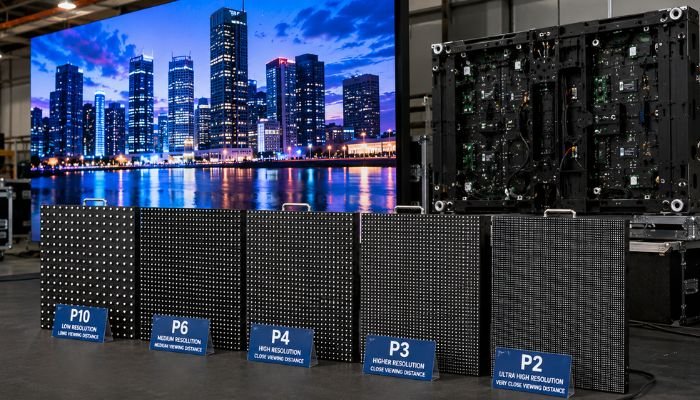
When businesses in Pakistan start shopping for an SMD screen, the first specification they encounter is pixel pitch — and it’s often the most confusing. You’ll see numbers like P1.5, P2.5, P3.91, P6, P10, and P16 thrown around, but what do they actually mean? And more importantly, which one does your business need?
Pixel pitch is the single most important factor in determining your LED display’s image quality, optimal viewing distance, and — crucially — the price. A P1.5 screen costs roughly 4-5 times more per square meter than a P10 screen. Choose the wrong pixel pitch and you’ll either overspend on resolution you don’t need or end up with a screen that looks pixelated to your audience.
This guide breaks down LED screen pixel pitch in plain language, with practical examples and specific recommendations for common business applications in Pakistan.
What Is Pixel Pitch in LED Screens?
Pixel pitch (also called dot pitch or pixel density) is the distance in millimeters between the centers of two adjacent LED pixels on an SMD display. For example, a P3.91 screen has pixels spaced 3.91 millimeters apart. The “P” stands for pixel pitch — so P6 means 6mm pitch, P10 means 10mm pitch, and so on.
Here’s the key relationship: smaller pixel pitch = tighter pixel spacing = higher resolution = higher cost per square meter.
Pixel pitch directly determines two critical display characteristics:
- Image resolution: A P2 screen has 250,000 pixels per square meter. A P10 screen has only 10,000 pixels per square meter. That’s a 25x difference in detail.
- Optimal viewing distance: The closer viewers are to the screen, the tighter the pixel pitch must be to avoid seeing individual LED dots (the “screen door effect”).
The Pixel Pitch Viewing Distance Rule
The industry standard for calculating minimum viewing distance is simple: Minimum viewing distance (meters) = Pixel pitch (mm) ÷ 1000 × 1,000, or more practically, the pixel pitch in mm equals the minimum comfortable viewing distance in meters.
Here’s a practical reference table for Pakistan’s common SMD screen pixel pitches:
| Pixel Pitch | Min. Viewing Distance | Optimal Viewing Distance | Max. Effective Distance | Typical Application |
|---|---|---|---|---|
| P1.2 | 1.2m | 2-3m | 5m | Control rooms, broadcast studios |
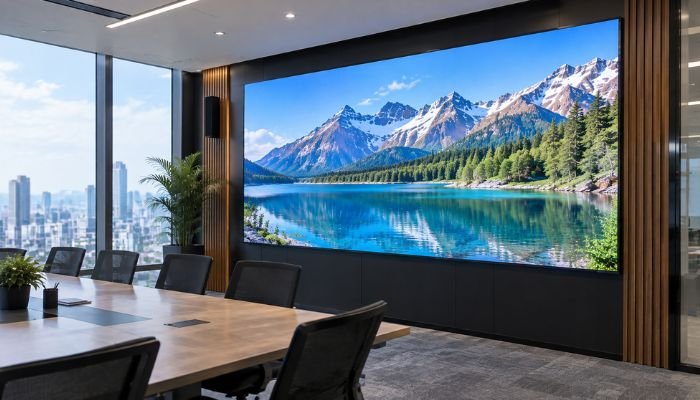
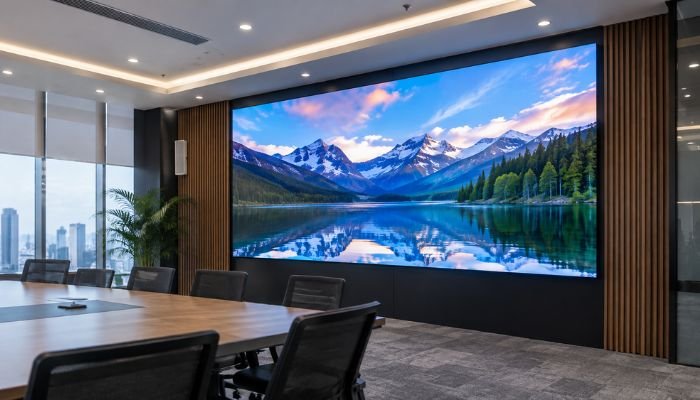
| P1.5 | 1.5m | 3-5m | 8m | Corporate boardrooms, luxury retail |
| P1.8 | 1.8m | 3-6m | 10m | Conference rooms, exhibition booths |
| P2.5 | 2.5m | 5-8m | 15m | Indoor events, retail displays |
| P3.91 | 3.9m | 8-12m | 20m | Indoor events, stage backdrops |
| P4 | 4m | 8-15m | 25m | Conference halls, auditoriums |
| P5 | 5m | 10-20m | 30m | Showrooms, medium indoor displays |
| P6 | 6m | 12-25m | 40m | Large indoor venues, semi-outdoor |
| P8 | 8m | 15-30m | 50m | Outdoor building facades |
| P10 | 10m | 20-50m | 80m | Outdoor billboards, roadside displays |
| P16 | 16m | 30-80m | 120m | Highway billboards, stadium screens |
How to Choose the Right Pixel Pitch for Your Business
For Indoor SMD Screens
Indoor environments have controlled lighting, so brightness requirements are lower (1,200-2,500 nits). The primary consideration is viewing distance:
- Close-up viewing (1-3m): P1.2 to P1.8 — ideal for control rooms, command centers, and high-end retail displays where viewers stand close to the screen.
- Medium distance (3-8m): P2 to P3.91 — the sweet spot for conference rooms, hotel lobbies, and exhibition booths. Most corporate installations in Lahore and Karachi use P2.5 or P3.
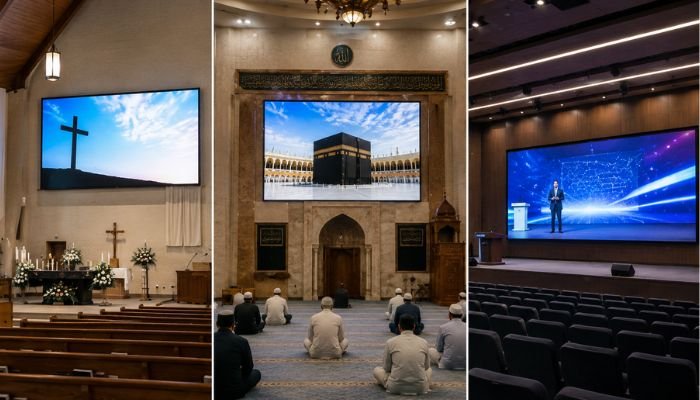
- Far viewing (8-20m): P4 to P6 — suitable for auditoriums, prayer halls, and large indoor venues where the audience is seated at a distance.
For Outdoor SMD Screens
Outdoor screens face direct sunlight, requiring 5,500+ nits brightness. Pixel pitch selection depends on the installation height and viewer distance:
- Street-level storefront displays: P3.91 to P5 — viewers are 3-10 meters away. Common for shopfronts in commercial areas like Liberty Market Lahore or Tariq Road Karachi.
- Elevated building displays (3-8m height): P6 to P8 — viewers are 10-30 meters away. Used for building facade advertising.
- Roof-mounted billboards: P10 — the standard for roadside billboards in Pakistan. Viewers are 20-50+ meters away, usually in moving vehicles.
- Highway billboards: P16 — for displays visible from 50+ meters, typically along motorways and inter-city roads.
For Rental and Event SMD Screens
Rental LED screens need versatility since they’re used across different venues. The most popular rental pixel pitches in Pakistan are:
- P3.91 indoor: The go-to rental screen for indoor events, conferences, and weddings. Covers audiences 4-20 meters away.
- P4.81 outdoor: The standard outdoor rental screen for stage backdrops and outdoor events. Handles both moderate-distance indoor and outdoor use.
Pixel Pitch vs. Resolution: Understanding the Difference
Many buyers confuse pixel pitch with resolution. Here’s the distinction:
- Pixel pitch is a physical property — the distance between LED pixels on the panel.
- Resolution is the total number of pixels on the screen, calculated as (width ÷ pitch) × (height ÷ pitch).
For example, a 4m × 3m screen with P4 pitch has a resolution of 1000 × 750 = 750,000 pixels. The same screen with P2.5 pitch has 1600 × 1200 = 1,920,000 pixels — over 2.5x more detail.
This is why pixel pitch matters more than physical screen size. A smaller screen with a tight pixel pitch can deliver higher resolution than a larger screen with a wide pitch.
Common Pixel Pitch Mistakes Pakistani Businesses Make
Overbuying Resolution
The most common mistake is choosing a pixel pitch tighter than necessary. A P2 screen installed where viewers are always 15+ meters away provides zero visible benefit over a P5 screen — but costs 3x more. Match the pitch to your actual viewing distance, not to a “bigger is better” mentality.
Ignoring Screen Content Type
If your screen primarily displays text and simple graphics (prices, menus, announcements), a wider pixel pitch is perfectly adequate. High-resolution video content demands tighter pitch. A pharmacy displaying queue numbers doesn’t need P2; P6 or P8 would serve perfectly at a fraction of the cost.
Forgetting About Content Resolution
Your screen’s resolution determines the content quality it can display. If you plan to show 1080p video, your screen needs at least 1920 × 1080 total pixels. A 4m × 2.25m P10 screen has only 400 × 225 = 90,000 pixels — far below 1080p. You’d need at least a P4 screen at that size to display true 1080p content.
Pixel Pitch and Brightness: The Combined Effect
Pixel pitch also affects perceived brightness. Wider-pitch screens have larger dark gaps between pixels, which reduces perceived brightness at close range. This is why outdoor P10 screens look fine from 20 meters but appear dim and pixelated from 5 meters.
For Pakistan’s outdoor environment, where sunlight can reach 100,000 lux, the combination of pixel pitch and brightness (nits) is crucial. A P10 screen at 7,500 nits is the standard for roadside billboards. A P6 screen at 6,500 nits works for elevated building displays. Going tighter than P6 outdoor without increasing brightness proportionally can result in poor visibility during peak daylight hours.
Frequently Asked Questions
What pixel pitch do I need for a conference room in Pakistan?
For a standard conference room where viewers sit 4-8 meters from the screen, P2.5 is ideal. If your room is larger (viewers 8-15m away), P3.91 or P4 will deliver excellent quality at a lower cost.
Is P10 good enough for outdoor advertising in Pakistan?
Yes, P10 is the industry standard for outdoor billboard advertising in Pakistan. It’s the most cost-effective choice for displays viewed from 20+ meters, which covers most roadside and building-top installations in cities like Lahore, Karachi, and Islamabad.
What’s the difference between P3.91 and P4?
The difference is minimal — P3.91 has pixels 3.91mm apart, while P4 has 4mm apart. P3.91 is more common in rental screens because it’s a standardized module size (500mm × 500mm), making it easier to source replacement panels. P4 is often slightly cheaper per square meter.
Does pixel pitch affect power consumption?
Yes. Tighter pixel pitch means more LEDs per square meter, which consumes more power. A P2 screen consumes roughly 2-3x more power than a P6 screen of the same size. Factor this into your operational cost calculations — at Pakistan’s commercial electricity rates, the difference adds up significantly over years of operation.
Conclusion
The golden rule of SMD screen pixel pitch is simple: measure your actual viewing distance, then choose the pitch that matches it. Don’t overpay for resolution your audience can’t see, and don’t underbuy pitch that makes your screen look pixelated. For most indoor business applications in Pakistan, P2.5 to P3.91 hits the sweet spot of quality and value. For outdoor advertising, P10 remains the cost-effective standard.
Still unsure which pixel pitch is right for your specific installation? Pro SMD Screens offers free consultation with detailed viewing distance analysis and pixel pitch recommendations. Contact us with your space dimensions and intended use, and we’ll recommend the optimal specification for your budget.