
| ⚡ TL;DR — Quick Answer
• Hospitals deploy SMD LED screens across four zones — main lobby, OPD waiting areas, emergency/triage, and corridors — each with a different reliability requirement. • Waiting area and emergency screens need close-viewing clarity (P2–P2.5) and near-zero downtime, since patients rely on them for real-time queue and wait-time information. • Lobby and directory screens reduce staff workload by answering wayfinding questions before patients need to ask at the reception desk. • Pro SMD Screen supplies and installs healthcare-grade LED displays with Qiangli, Dahua, Unilumin, Absen, and LianTronics panels across Pakistan. |
Why Hospitals Are Investing in Digital Display Infrastructure
Pakistani hospitals public and private face a common problem: patients and visitors struggle to navigate large facilities, waiting rooms run without clear queue visibility, and staff spend significant time answering directional questions that a well-placed screen could handle instead. LED and SMD displays address this directly, turning static printed signage into something that updates in real time and actually reduces confusion at the point it happens.
Beyond patient experience, hospital administrators increasingly use these displays for health awareness campaigns, department promotions, and internal communication — all from the same infrastructure investment.
The Four Hospital Zones Where Screens Matter Most
Main Lobby & Reception
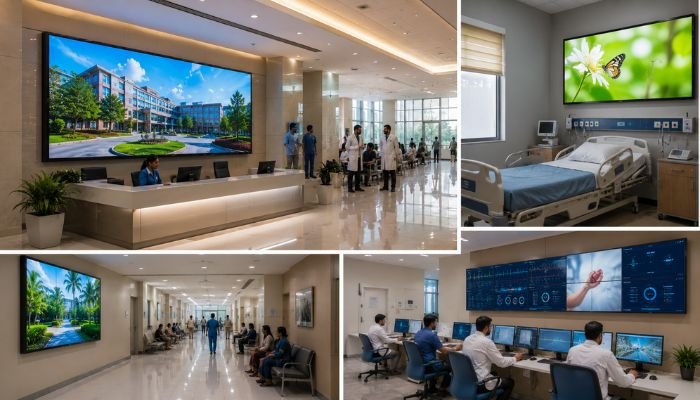
The first point of contact for patients and visitors. Lobby screens typically combine hospital branding with wayfinding information — department locations, floor directories, and general announcements — reducing the volume of basic questions directed at reception staff.
OPD Waiting Areas
Outpatient waiting rooms benefit most from queue and token number displays, letting patients track their position without repeatedly approaching the counter. These screens often also carry health awareness content during wait times, turning otherwise idle time into useful communication.
Emergency & Triage Areas
Emergency departments need real-time status boards showing wait times and triage information. Reliability is non-negotiable here — these screens must run 24/7 without interruption, since any downtime directly affects a high-stress environment.
Corridors & Department Directories
Way finding screens near elevators and department entrances replace printed directory boards, and can be updated instantly when departments relocate or hours change, which happens more often in hospitals than most other facility types.
Matching Pixel Pitch and Reliability to Hospital Zones
| Hospital Area | Screen Purpose | Pixel Pitch | Key Requirement |
| Main Lobby / Reception | Wayfinding, hospital branding, welcome info | P2.5–P3 | Seamless large format, calm and clear visuals |
| OPD Waiting Areas | Queue/token display, health awareness content | P2–P2.5 | Close-viewing clarity, high uptime reliability |
| Emergency & Triage | Real-time status boards, wait-time updates | P2–P2.5 | 24/7 uninterrupted operation, high legibility |
| Corridors & Directories | Department wayfinding, floor directories | P3–P4 | Always-on reliability, simple staff updates |
Reliability matters more in healthcare settings than almost any other vertical — a queue display going dark in a busy OPD doesn’t just look bad, it actively creates confusion and complaints. Panel and power-supply selection for hospital installations should prioritize proven uptime over marginal cost savings.
Content That Works in Healthcare Settings
- Real-time queue and token numbers in OPD and pharmacy waiting areas
- Department and floor wayfinding in lobbies and corridors
- Health awareness and preventive-care content during patient wait times
- Visiting hours, emergency contact numbers, and general hospital announcements
- Doctor availability and OPD schedule boards
Content in clinical areas should stay calm and low-stimulation — bright, fast-moving advertising-style content is generally avoided in waiting rooms and patient-facing clinical zones in favor of clear, readable information.
Installation Considerations for Healthcare Facilities
Uptime and Redundancy
Hospital screens, especially in emergency and OPD areas, should be specified with reliable power supplies and, where critical, backup power integration so displays don’t go dark during outages.
Infection Control and Cleaning
Panels and mounting hardware in clinical-adjacent areas need surfaces that tolerate regular disinfectant cleaning without damage, a consideration less relevant in retail or hospitality installations.
Working Around Live Hospital Operations
Like hotels, hospitals cannot close for installation work. Scheduling around low-traffic hours and coordinating closely with facilities management is essential to avoid disrupting patient care.
Integration with Queue Management Systems
Where hospitals already run a token or queue management system, the LED display should integrate directly with that software rather than requiring manual updates, which is impractical at hospital patient volumes.
Cost Factors for Hospital LED Installations
- Reliability-focused components (power supplies, redundancy) add cost but are non-negotiable for emergency and OPD zones
- Queue-integrated displays cost more upfront than standalone screens but reduce staff workload significantly over time
- Lobby and directory screens are comparatively lower-cost and often the starting point for hospitals building out digital infrastructure in phases
- Maintenance contracts matter more here than in most verticals, given the operational stakes of screen downtime
Why Hospitals and Clinics Choose Pro SMD Screen
Pro SMD Screen, based in Lahore, supplies and installs indoor LED display solutions for hospitals, clinics, and healthcare facilities across Pakistan. As an authorized dealer for Qiangli, Dahua, Hikvision, Unilumin, Absen, and LianTronics, the company prioritizes reliability-focused panel selection for clinical and emergency environments.
Healthcare engagements typically include a facility assessment across proposed zones, reliability and redundancy recommendations for critical areas, and coordination with existing queue-management or hospital information systems where applicable.
Frequently Asked Questions
Q: What pixel pitch is best for hospital waiting room screens?
A: P2 to P2.5 is typical for OPD and waiting areas, since patients view queue and token information from moderate seating distances.
Q: Can hospital LED screens integrate with existing queue management systems?
A: Yes, displays can be configured to pull live data from an existing token or queue management system rather than requiring manual updates.
Q: Why does reliability matter more for hospital screens than other installations?
A: Hospital screens, especially in emergency and OPD areas, directly affect patient experience and staff workload in a high-stakes environment, so downtime has a bigger practical impact than in retail or event settings.
Q: Are hospital LED screens safe to clean with disinfectants?
A: Panels and mounts specified for clinical-adjacent areas should use surfaces that tolerate regular disinfectant cleaning without damage.
Q: How is installation scheduled without disrupting hospital operations?
A: Installation is planned around low-traffic hours in coordination with the facility’s operations and biomedical engineering teams.
Q: Does Pro SMD Screen serve hospitals outside Lahore?
A: Yes, Pro SMD Screen serves healthcare facilities across Pakistan, including Karachi, Islamabad, and Rawalpindi, with a facility assessment arranged before every quote.
Get a Healthcare LED Screen Quote
Pro SMD Screen works with hospitals, clinics, and healthcare facilities across Pakistan to design reliable LED displays for lobbies, waiting areas, emergency departments, and corridors. Contact the team on +92-42-3592-9400 or +92-321-4086763 for a facility assessment and quote-based proposal.