
| TL;DR
SMD video walls are widely used in Pakistani control rooms, network operation centers (NOC), security operation centers (SOC), and corporate boardrooms for continuous monitoring and presentations. Control rooms typically need fine P1.2–P1.8 pixel pitch for dense data readability and 24/7 reliability with redundant components, while boardrooms and lobbies can use a slightly coarser P1.8–P2.5 pitch. Seamless, bezel-free video walls with a dedicated controller are standard for both use cases. Pro SMD Screen supplies and installs indoor fine-pitch video walls for control rooms and offices across Lahore, Karachi, and Islamabad. |
Why Businesses Are Adopting SMD Video Walls
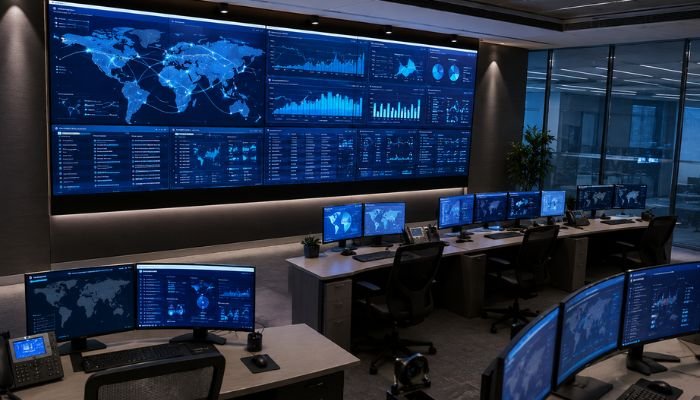
Traditional multi-monitor setups in control rooms create visible gaps and inconsistent brightness between screens, making it harder to track dashboards, CCTV feeds, or network data across a unified view. SMD video walls solve this by combining multiple LED panels into a single seamless display, giving control room operators, IT teams, and security staff one continuous canvas instead of a grid of separate monitors.
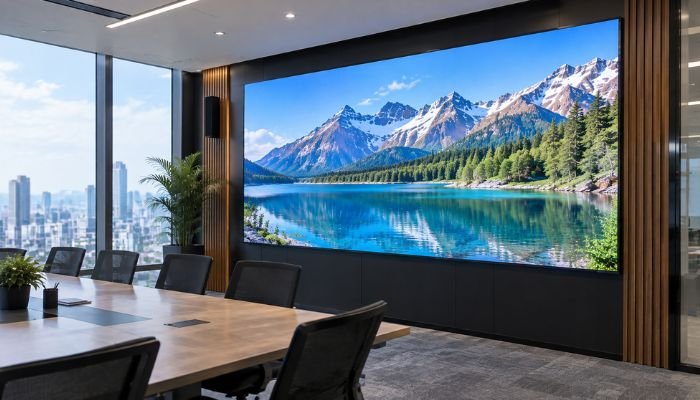
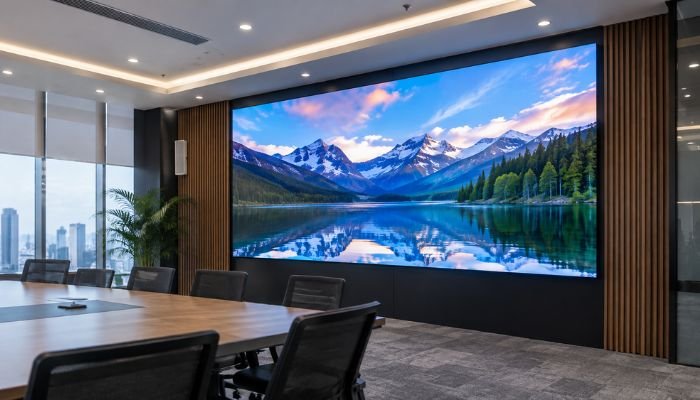
In corporate offices, the same fine-pitch LED technology is increasingly used in boardrooms and reception areas, replacing projectors and large LCD panels with sharper, brighter displays that work well even with ambient lighting — a common issue in glass-walled Pakistani office buildings.
Common Uses in Pakistani Businesses
- Network Operations Centers (NOC) — real-time monitoring of IT infrastructure and uptime
- Security Operations Centers (SOC) — CCTV wall for banks, malls, and industrial facilities
- Boardrooms — video conferencing, presentations, and data visualization
- Reception & lobby branding — company visuals, welcome messages, live updates
- Command centers — utility companies, telecom operators, and government monitoring rooms
Choosing the Right Pixel Pitch
Control rooms display dense data — small text, multiple camera feeds, and charts — so a finer pixel pitch matters more here than in most other SMD applications. Boardrooms and lobby walls, viewed from a slightly greater distance, can use a marginally coarser pitch without losing clarity.
| Event Type | Viewing Distance | Recommended Pixel Pitch |
| Boardroom / meeting room screen | 3–8 ft | P1.5 or P1.8 |
| Reception lobby / branding wall | 6–15 ft | P1.8 or P2 |
| NOC / SOC monitoring wall | 8–20 ft | P1.2 or P1.5 |
| Large control room command center | 15 ft+ | P1.5 or P2 |
Control Room vs Corporate Office Requirements
While both use cases rely on similar SMD panel technology, the operational requirements differ significantly, especially around uptime and redundancy.
| Factor | Control Room / NOC-SOC Video Wall | Corporate Office / Boardroom Screen |
| Best for | 24/7 monitoring, network operations, security surveillance | Boardroom presentations, reception branding, lobby displays |
| Operating hours | Continuous, 24/7/365 with zero downtime tolerance | Business hours, occasional evening use |
| Pixel pitch | Finer pitch (P1.2–P1.8) for dense data and small text | Moderate pitch (P1.8–P2.5) for presentations and video |
| Redundancy needs | Built-in backup power, hot-swappable modules critical | Standard reliability, backup less critical |
| Bezel requirement | Seamless, near-zero bezel for unified data view | Seamless preferred for branding impact |
| Control system | Video wall controller with multi-source switching | Simple HDMI/wireless casting input usually sufficient |
| [Quick tip
For any 24/7 control room, insist on a video wall controller with hot-swappable modules and a backup power path — a single failed panel should never take down the entire monitoring wall during a live incident. |
What Affects the Cost in Pakistan
SMD video wall pricing for control rooms and offices is generally quoted in PKR and depends on a few factors:
- Pixel pitch — finer control-room-grade panels (P1.2–P1.5) cost more than standard indoor pitches
- Screen size — total video wall area in square feet drives the base cost
- Video wall controller — multi-input switching and redundancy features add to system cost
- Mounting structure — floor-standing racks vs wall-mounted frames
- Maintenance contract — AMC coverage for 24/7 operations reduces long-term downtime risk
Because control room requirements vary widely by facility size and monitoring needs, most vendors — including Pro SMD Screen — provide a custom quote after a site assessment rather than a fixed price list.
How to Choose a Vendor for Control Room & Office Installations
1. Ask about 24/7 reliability track record
Control room panels run continuously for years without downtime. Ask the vendor for examples of similar 24/7 installations and their uptime history before committing.
2. Confirm video wall controller compatibility
The controller manages multiple input sources — CCTV feeds, dashboards, and presentation content — onto the wall. Confirm it supports your existing systems and allows future expansion.
3. Check heat management and ventilation planning
Continuously running panels generate heat. A vendor experienced in control room installs will plan proper ventilation or cooling to prevent thermal issues that shorten panel lifespan.
4. Ask about after-sales AMC support
Since control rooms cannot tolerate extended downtime, confirm response-time commitments for repairs and whether spare modules are kept on hand locally.
| Pro SMD Screen — Control Room & Office Support
Pro SMD Screen supplies and installs fine-pitch SMD video walls for control rooms, NOC/SOC facilities, and corporate boardrooms across Lahore, Karachi, and Islamabad, including video wall controller setup and AMC maintenance support. |
Common Mistakes to Avoid
- Choosing too coarse a pixel pitch for dense data walls, making small text unreadable
- Skipping a proper video wall controller, limiting input flexibility later
- Ignoring ventilation planning for enclosed control room spaces
- No AMC or spare-parts plan for a 24/7 critical monitoring wall
- Underestimating future scalability needs when sizing the initial installation
Frequently Asked Questions
Q: What pixel pitch is best for a control room video wall?
A: Most control rooms use P1.2 to P1.8 pixel pitch, since operators view dense data and multiple camera feeds from a relatively short distance and need sharp, readable text.
Q: Can the same SMD screen be used for both a control room and a boardroom?
A: The underlying technology is similar, but control rooms typically need a finer pixel pitch and built-in redundancy for 24/7 operation, while boardroom screens can use a slightly coarser pitch since uptime requirements are less strict.
Q: Why do control rooms need a video wall controller?
A: A video wall controller lets operators switch and arrange multiple input sources — CCTV feeds, dashboards, or presentations — across the full video wall as a single unified display.
Q: How much does an SMD video wall cost for an office in Pakistan?
A: Cost depends on pixel pitch, total screen size, and controller requirements. Vendors typically provide a custom PKR quote after a site assessment rather than a fixed price list.
Q: Do control room SMD screens need special maintenance?
A: Yes, since they run continuously, an AMC (annual maintenance contract) with fast response times and spare modules on hand is strongly recommended to minimize downtime.
Conclusion
SMD video walls give control rooms, NOC/SOC facilities, and corporate offices in Pakistan a way to monitor data and present information on a single seamless display rather than a fragmented grid of monitors. Getting the pixel pitch right for viewing distance, investing in a proper video wall controller, and planning for 24/7 reliability with AMC support are the decisions that determine whether an installation performs well for years.
For control rooms, NOC/SOC facilities, or corporate offices in Lahore, Karachi, or Islamabad, Pro SMD Screen provides fine-pitch video wall solutions with full installation, controller setup, and maintenance support.